Helping an aging parent facing foreclosure or overwhelming debt
By Petra Vogel · Updated 2026-08-18
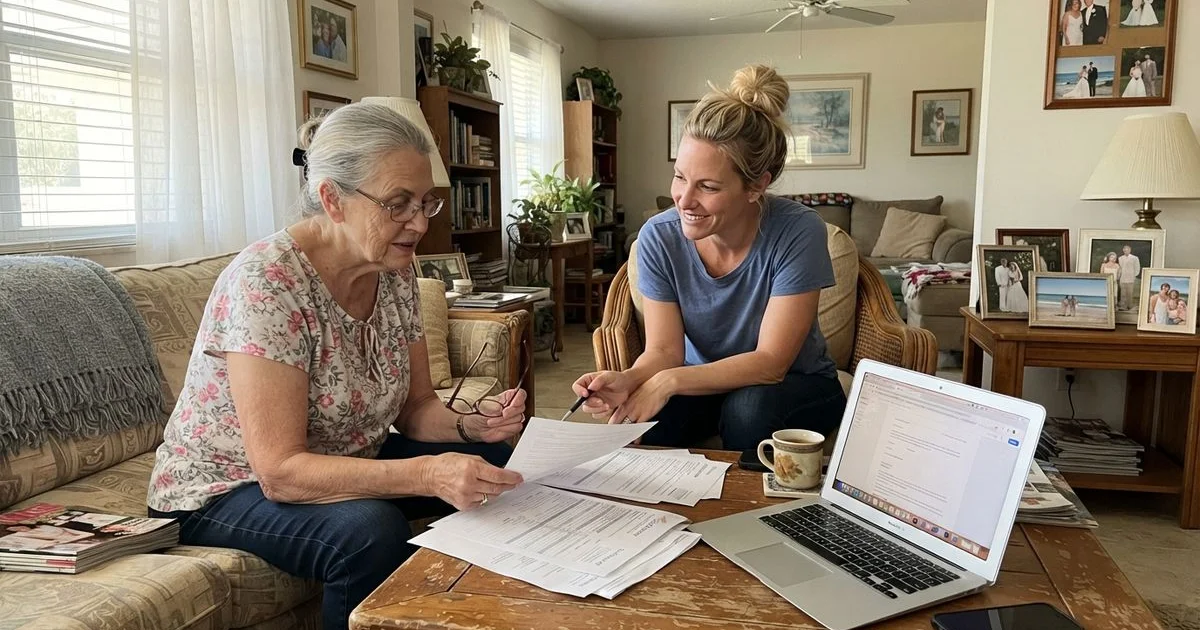
Discovering that a parent is behind on their mortgage or being pursued by debt collectors is disorienting, partly because it often surfaces late, after mail has piled up unopened or a parent has quietly hoped the problem would resolve itself. This guide is a starting point for adult children trying to help without overstepping or making things worse.
This is general information, not legal advice. An elder law attorney or a foreclosure attorney can address your parent’s specific situation directly.
Start with authorization, not action
Before you can meaningfully help, you generally need legal standing to act. A financial power of attorney lets you speak with a mortgage servicer, review account details, and negotiate on your parent’s behalf. Without it, most servicers and attorneys can share very little information with you directly, even with the best intentions. If your parent is willing and able to sign one now, before a crisis deepens, it saves significant time later.
A practical first pass
- Gather the mail and documents together, rather than assuming you already know the full picture. Notices often arrive weeks apart and it’s easy to miss the pattern.
- Identify what’s actually owed and to whom, distinguishing the mortgage from any other debts like credit cards or medical bills that may also be in collections.
- Check for a reverse mortgage, which has different default triggers (property taxes, insurance, occupancy) than a traditional mortgage’s missed payments.
- Look into property tax exemptions or deferral programs, since many Florida counties offer relief for eligible seniors that can meaningfully lower housing costs.
- Have a direct but gentle conversation about what your parent wants, since some parents may prefer to sell and downsize rather than fight to keep a home that’s become a financial burden.

Balancing help with your parent’s autonomy
It’s worth being thoughtful here. A parent who is mentally competent has the right to make their own financial decisions, even ones you might not choose yourself. Your role is generally to make sure they have full information and real options, not to take over unilaterally unless capacity is genuinely in question, in which case a different legal process may apply.
| Situation | A reasonable next step |
|---|---|
| Parent has a power of attorney set up already | Contact the servicer or attorney directly on their behalf |
| No power of attorney yet, parent is willing | Set one up before acting further |
| Parent resists discussing the problem | Try organizing paperwork together as a lower-pressure entry point |
| Capacity is genuinely in question | Consult an elder law attorney about guardianship or other legal options |
| Reverse mortgage is involved | Check property tax and insurance status first, since those are common triggers |
When to bring in a professional
Once you understand the basic picture, a consultation with an attorney can clarify what’s realistically achievable, whether that’s a loan modification, a negotiated resolution, or a straightforward sale of the property. A firm on this directory can walk through the options directly with you and your parent. You can review how local firms are evaluated on the ranking method page, or start from the homepage to explore the full directory.
Watching for other debt, not just the mortgage
Mortgage trouble often shows up alongside other financial strain, medical bills, credit card debt, or aggressive debt collection calls that a parent may not have mentioned. It’s worth asking directly whether other collectors have been calling, since some of the same protections and legal aid resources that apply to a mortgage problem also apply to consumer debt, and addressing everything together generally produces a clearer overall plan than tackling the mortgage in isolation.
If part of what you’re sorting out involves what happens to the mortgage after a parent passes away, the guide on what happens to a mortgage when a homeowner dies in Florida covers that separately.
Taking care of yourself in the process
Helping a parent through a financial crisis is its own kind of stress, layered on top of whatever else is happening in your own life. It’s reasonable to set some boundaries around how much you personally take on, and to involve siblings or other family members where possible rather than carrying the coordination alone. A parent’s financial problem doesn’t have to become a single adult child’s full-time responsibility to be handled well.
Questions people ask
- Can I legally act on my parent's behalf with their mortgage servicer?
- Generally you'll need a power of attorney, or your parent's direct authorization on a recorded call, before a servicer or attorney can discuss account details with you. Setting this up before a crisis makes it much easier to act quickly later.
- What if my parent doesn't want to admit there's a problem?
- This is common, and pushing too hard can backfire. Framing the conversation around organizing paperwork or reviewing bills together, rather than confronting the situation directly, often opens the door more easily.
- Should I pay my parent's mortgage directly to stop a foreclosure?
- It can buy time, but it's worth first understanding the full picture, including how far behind the account is and whether a modification or other resolution might solve the problem more durably than an ongoing informal subsidy.
- Is a reverse mortgage relevant here?
- It can be. If your parent has a reverse mortgage, the default triggers are different from a traditional mortgage, generally centered on property taxes, insurance, and occupancy requirements rather than a missed monthly payment.