Foreclosure and divorce: who is responsible for the mortgage in Florida
By Petra Vogel · Updated 2026-08-13
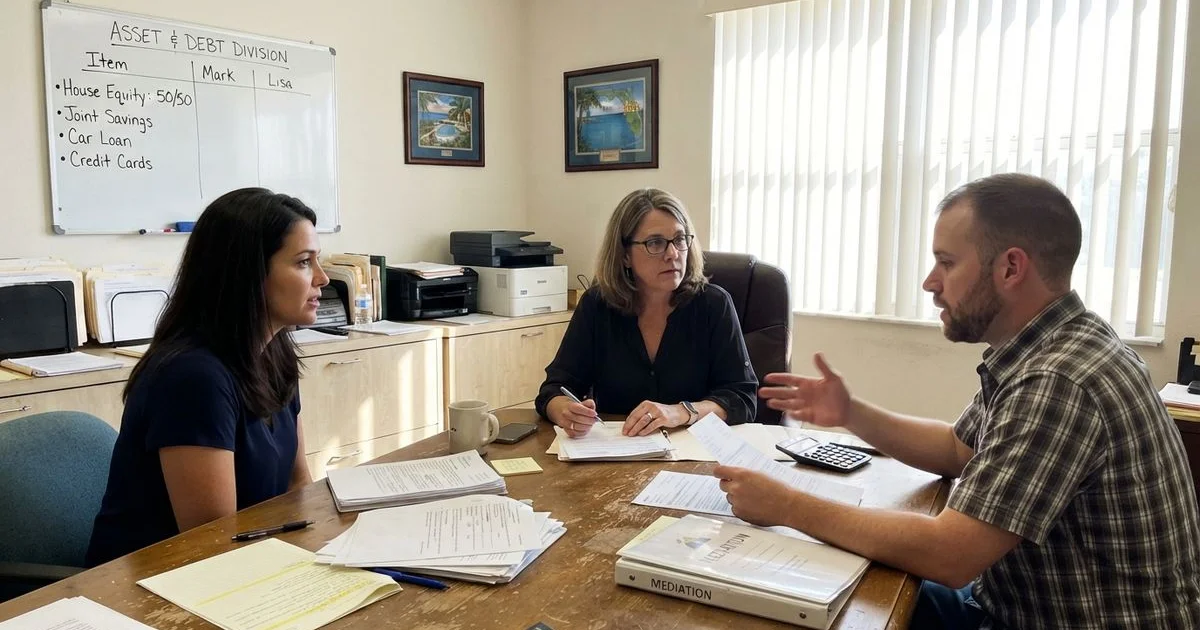
Divorce and mortgage trouble often arrive together, since a single household splitting into two frequently strains a budget that was already built around one combined income. Figuring out who is actually responsible for the mortgage, and what happens if payments lapse, matters both for your finances and your credit.
This is general information about how these situations commonly play out in Florida, not legal advice for your specific divorce or mortgage. A family law attorney and, if needed, a real estate or foreclosure attorney can address your specific facts.
The decree and the mortgage are two separate things
A divorce decree can state that one spouse is responsible for making mortgage payments going forward, but that decree is an agreement between the two spouses. It doesn’t change what the mortgage lender is owed or by whom, since the loan is a separate contract. If both spouses’ names remain on the original mortgage, the lender can generally pursue either person, or the property itself, if payments stop, regardless of what the decree says.
The main ways this typically gets resolved
- Refinancing into one spouse’s name. The spouse keeping the home applies for a new mortgage solely in their name, paying off and replacing the joint loan. This fully separates liability but requires qualifying independently for the new loan.
- Selling the home and dividing proceeds. Sometimes neither spouse can afford or wants to keep the home, and selling avoids the ongoing liability question entirely.
- One spouse keeps the home without refinancing. This leaves both names on the loan even after the divorce, which can work if trust and communication remain solid, but carries real risk if payments are missed later.
- Continuing to co-own temporarily. Some divorcing spouses agree to keep the home jointly for a period, such as until children finish school, with a clear plan for eventual sale or refinance.

What happens if payments stop after the divorce
| Scenario | What generally happens |
|---|---|
| Refinanced into one name, that spouse stops paying | Only that spouse’s credit and the property are at risk |
| Both names remain on loan, either spouse stops paying | Both spouses’ credit can be affected, and the lender can pursue foreclosure |
| Home sold as part of the divorce | Mortgage is paid off from sale proceeds, removing ongoing risk |
| Decree assigns payment but loan stays joint, and it’s missed | The other spouse may need to sue for reimbursement separately from the mortgage issue itself |
Protecting yourself during the process
If you’re going through a divorce and a jointly held mortgage is part of the picture, a few things are worth prioritizing: get the mortgage question addressed explicitly in the settlement, not left vague; confirm in writing what happens if the responsible spouse misses a payment; and monitor the loan status yourself if your name remains on it, rather than relying solely on your ex-spouse’s assurances. Credit monitoring can help you catch a missed payment early if you’re no longer receiving the mortgage statements directly.
Divorce isn’t the only family situation that complicates a mortgage. If you’re managing a parent’s finances rather than your own, the guide on helping an aging parent facing foreclosure or overwhelming debt covers similar ground from that angle.
Why timing the refinance matters
If refinancing into one spouse’s name is the plan, it’s worth thinking carefully about when that happens relative to the divorce being finalized. Some spouses agree to refinance before the divorce is final, while the household still shows two incomes on paper for qualifying purposes, though this isn’t always realistic or advisable depending on the situation. Others wait until after, only to discover that qualifying alone, on a single income and with a new set of monthly expenses from separate households, is harder than expected. Discussing the refinance timeline explicitly with both a family law attorney and a lender, rather than assuming it will simply happen on schedule, tends to avoid an unpleasant surprise months into the process.
When foreclosure risk becomes real
If payments have already been missed and a notice of default or lawsuit has arrived, the situation follows the same general foreclosure process as any other case, complicated further by the divorce. An attorney experienced in both foreclosure defense and family law can help address the mortgage issue directly, ideally alongside whoever is already handling your divorce. You can see how local firms are evaluated on this directory’s ranking method page, or browse the full directory from the homepage.
Questions people ask
- If my divorce decree says my ex-spouse pays the mortgage, am I still liable?
- Often yes, if your name remains on the original loan. A divorce decree is an agreement between spouses, but it doesn't automatically remove either person's name from the mortgage contract itself, which is a separate agreement with the lender.
- Can the mortgage be refinanced into one spouse's name during a divorce?
- Yes, this is a common way to fully separate liability, though it requires the spouse keeping the home to qualify for a new loan on their own income and credit.
- What happens if my ex stops paying and the loan is still in both names?
- The lender can pursue foreclosure against the property regardless of what the divorce decree says about who was supposed to pay, and missed payments can affect both spouses' credit if both remain on the loan.
- Should mortgage and foreclosure issues be addressed before the divorce is finalized?
- Generally yes. Addressing who keeps the home, whether it will be refinanced or sold, and how missed payments will be handled before finalizing the divorce tends to prevent disputes and credit damage later.