Foreclosure and seniors: reverse mortgages, fixed incomes and your options
By Petra Vogel · Updated 2026-08-15
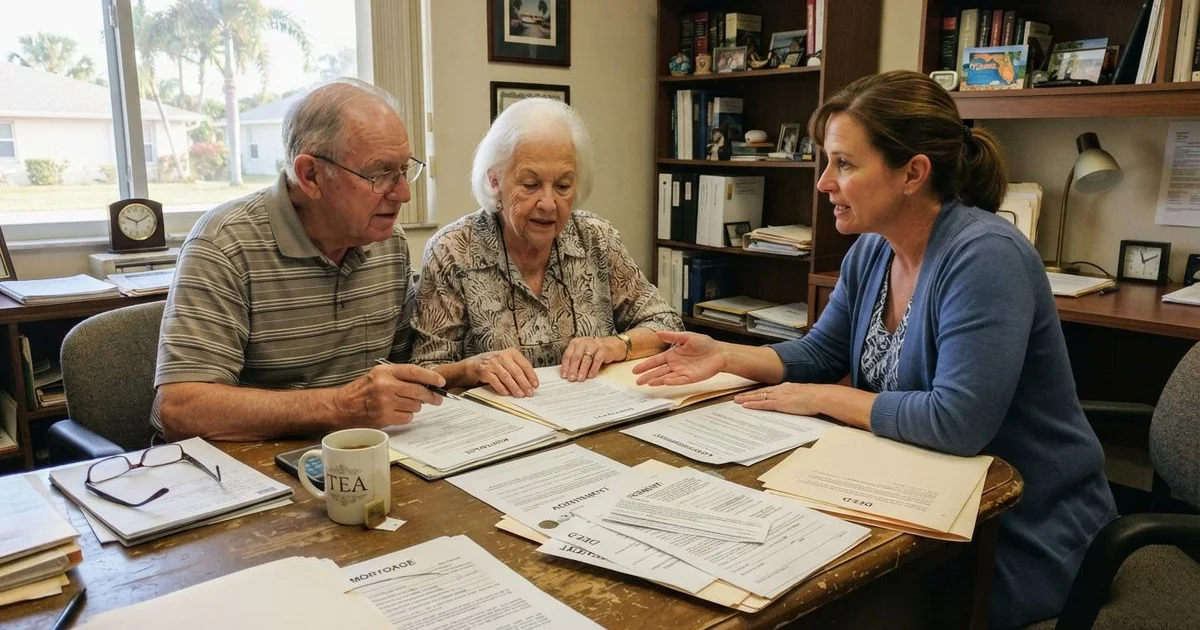
Older homeowners face a version of foreclosure risk that looks different from a typical missed-payment scenario. Fixed incomes limit flexibility, and products like reverse mortgages carry their own distinct default triggers that many seniors and their families don’t fully understand until a notice arrives. This guide covers both.
This is general information, not legal or financial advice for a specific situation. An elder law or foreclosure attorney can review your loan documents and financial picture directly.
Why seniors face a different set of risks
A fixed income, often Social Security or a pension, means there’s frequently no room to absorb an unexpected cost like a spike in property insurance or a large repair bill. Where a working-age homeowner might pick up extra hours or adjust a budget, a retired homeowner’s income is generally set. That makes even modest financial shocks more likely to snowball into missed mortgage or property charge payments.
How reverse mortgages default differently
A reverse mortgage doesn’t require monthly principal and interest payments the way a traditional mortgage does, which is part of its appeal for retirees. But it isn’t payment-free entirely. The homeowner is still required to keep up with property taxes, homeowners insurance, and basic home maintenance. Falling behind on any of these, or permanently moving out of the home, or passing away, can trigger the loan becoming due. If the balance isn’t repaid, refinanced, or the home sold within the required window, foreclosure can follow just as it would with a traditional mortgage default.

Common triggers worth watching for
- Missed property tax or insurance payments on a reverse mortgage, even when the loan itself has no monthly payment.
- Extended absence from the home, such as a long hospital or rehab stay, which can sometimes be treated as a permanent move if it exceeds certain time limits.
- Death of the borrower, after which heirs typically have a defined window to repay, refinance, or sell before foreclosure proceedings can begin.
- Deferred maintenance that violates the loan’s requirement to keep the property in reasonable condition.
Resources that can ease the pressure
| Resource | What it can help with |
|---|---|
| Florida property tax exemptions for seniors | Reduces the taxable value of the home, lowering the tax bill |
| Property tax deferral programs | Allows eligible seniors to defer some property tax payments |
| HUD-approved housing counseling | Free guidance specific to reverse mortgage and default issues |
| Area Agency on Aging programs | Can connect seniors with local assistance and benefits screening |
Checking eligibility for property tax relief in particular is worth doing early, since it directly reduces one of the most common reverse mortgage default triggers. For a broader rundown of free and reduced-cost legal help beyond these senior-specific programs, see free and low-cost legal help for foreclosure in Cape Coral Metro.
What families can do together
Adult children or other family members often end up helping sort this out, whether that’s reviewing mail for a notice that might otherwise go unopened, contacting the loan servicer with the homeowner’s authorization, or simply making sure property tax and insurance bills are actually being paid on schedule. Catching a missed tax payment or lapsed insurance policy early is usually far easier to fix than addressing it after a default notice has already been sent.
When to get legal help
If a reverse mortgage or traditional mortgage default notice has already arrived, or a family is trying to sort out options before it gets to that point, an attorney can clarify exactly what’s required to cure the default and what timeline applies. You can see how local firms are evaluated on this directory’s ranking method page, or browse the full directory from the homepage to find help suited to the situation.
A note on planning ahead
For seniors who haven’t yet run into trouble, a small amount of planning can prevent a lot of stress later. Setting up automatic payments for property taxes and insurance where possible, keeping a family member informed of account details in case of a health emergency, and reviewing a reverse mortgage’s specific requirements annually can catch a problem before it becomes a formal default. None of this eliminates risk entirely, but it narrows the gap between a minor lapse and a notice arriving in the mail unexpectedly.
Questions people ask
- Can a reverse mortgage lead to foreclosure?
- Yes. A reverse mortgage generally becomes due if the homeowner passes away, permanently moves out, or fails to keep up with property taxes, insurance, and home maintenance required under the loan, and failing to resolve that can lead to foreclosure.
- Does a fixed income make it harder to get a loan modification?
- Not necessarily, but modifications generally require showing the modified payment is affordable given your actual income, so a fixed income sets a firm ceiling on what payment amount can realistically work.
- Are there property tax relief programs that could help avoid default?
- Florida offers property tax exemptions and deferral programs for eligible seniors, which can meaningfully reduce housing costs and are worth checking before assuming a home is unaffordable.
- What should an adult child do if a parent's reverse mortgage is at risk?
- Contact the loan servicer directly, with the parent's authorization, to understand exactly why the loan is at risk and what cure options exist, and consider consulting an attorney if a foreclosure notice has already been sent.