Foreclosure rescue scams to watch for in Florida
By Petra Vogel · Updated 2026-08-11
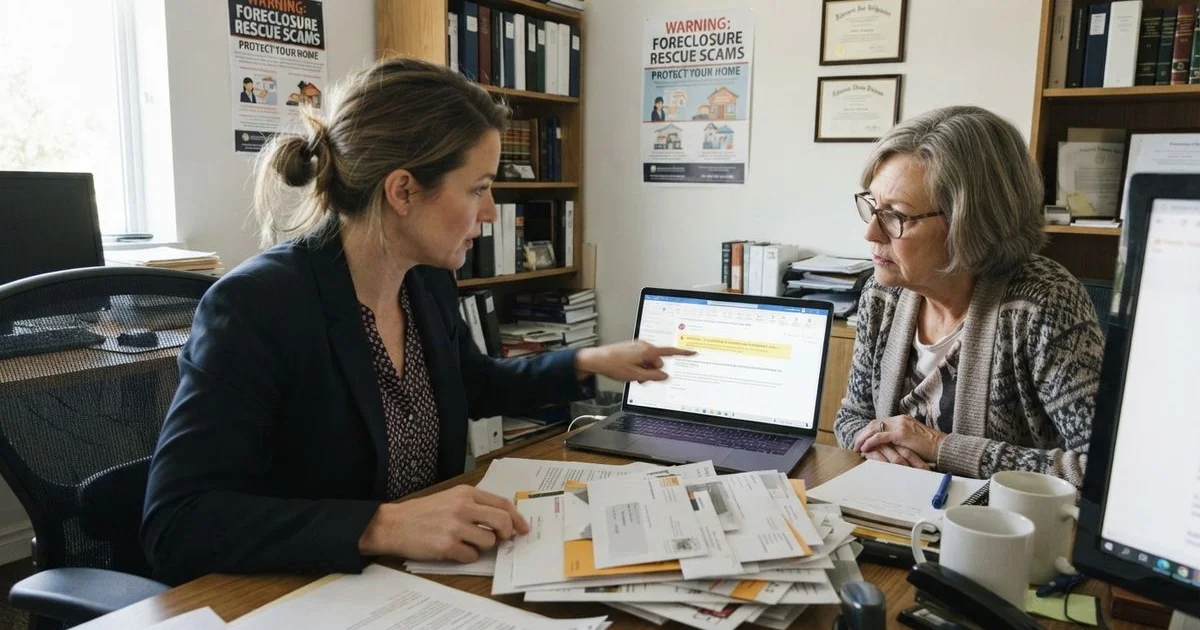
Facing foreclosure makes people vulnerable to promises of an easy fix, and unfortunately that vulnerability attracts scammers who know exactly what a stressed homeowner wants to hear. Florida has seen its share of foreclosure rescue schemes over the years. This guide covers the common tactics and how to protect yourself.
This is general information to help you recognize warning signs, not legal advice. If you suspect fraud, an attorney or the appropriate state agency can advise on your specific situation.
Common scam tactics
- Upfront fee demands for vague services. A request for a large payment before any real work begins, especially with little written detail about what’s actually being done, is one of the clearest red flags.
- “Save your home” mailers that look official. Some scams mimic government or court correspondence to create urgency and make an offer seem legitimate.
- Requests to sign over the deed “temporarily.” Some schemes convince homeowners to transfer title as part of a supposed rescue plan, then the homeowner loses ownership entirely while still owing the mortgage, or gets evicted as a renter in their own former home.
- Guaranteed outcomes. No legitimate attorney or housing counselor can guarantee a specific result in a foreclosure case, since outcomes depend on facts, the lender’s response, and the court. A guarantee is a warning sign, not reassurance.
- Pressure to act immediately and stop talking to your lender or attorney. Legitimate help doesn’t usually require cutting off communication with other parties involved in your case.
- Requests to redirect mortgage payments to a third party instead of your actual servicer, sometimes framed as a “special program.”
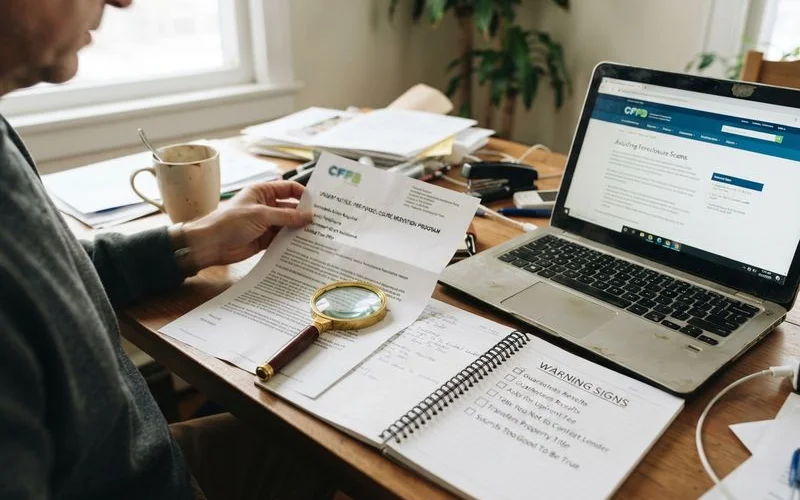
How to verify who you’re dealing with
| What you’re checking | How to verify |
|---|---|
| Is this person a licensed attorney? | Search the Florida Bar’s attorney directory |
| Is this a HUD-approved housing counselor? | Check the list maintained by HUD |
| Has this company had complaints filed against it? | Search the Florida Attorney General’s office and the Better Business Bureau |
| Is the fee structure legal? | Florida restricts upfront fees for foreclosure rescue consultants; ask for the fee arrangement in writing and compare it against what’s legally allowed |
A simple rule of thumb
Legitimate foreclosure help generally comes with clear, written terms, a licensed professional you can independently verify, and realistic language about possible outcomes rather than guarantees. If an offer involves signing over your deed, paying a large sum before any work is done, or redirecting payments away from your actual mortgage servicer, slow down and verify independently before doing anything.
If you think you’ve encountered a scam
Report it. The Florida Attorney General’s office and the Federal Trade Commission both take foreclosure rescue fraud complaints, and reporting helps protect other homeowners even if your own situation is already complicated. An attorney can also review any documents you’ve already signed to determine whether an arrangement can be challenged or unwound.
Why these scams tend to target people mid-crisis
Foreclosure rescue schemes work because they show up exactly when a homeowner is most likely to want a quick answer and least likely to slow down and verify one. A notice of default or a lawsuit already feels like an emergency, and a smooth pitch that promises to make the problem disappear plays directly into that urgency. Recognizing that pattern in the moment, that the pressure to act fast is itself part of the pitch, is often more useful than memorizing every specific scam tactic, since new variations appear regularly while the underlying pressure tactic stays the same.
Trust your instincts, then verify anyway
If something about an offer feels off, that instinct is worth listening to, but it shouldn’t be the only check you rely on. Even offers that feel entirely legitimate are worth independently verifying through the Florida Bar, HUD’s counselor directory, or a quick search with the Attorney General’s office, since some scams are run by people who present themselves convincingly and have no obvious red flags in conversation.
Where to find legitimate help instead
If you’re looking for real assistance, this directory’s homepage lists verified, reviewed attorneys across several categories, and its ranking method page explains exactly how firms are evaluated, so you can see the basis for any ranking rather than taking a claim at face value.
Questions people ask
- What is a foreclosure rescue scam?
- It's a scheme where someone offers to save a home from foreclosure, often for an upfront fee or by taking title to the property, but doesn't deliver the promised help and can leave the homeowner worse off than before.
- Is it illegal to charge upfront fees for foreclosure help in Florida?
- Florida restricts and closely regulates upfront fees charged by foreclosure rescue consultants, and certain arrangements are prohibited outright. A company demanding a large upfront fee before doing any work is a significant warning sign.
- How can I check if a company or individual is legitimate?
- You can verify attorney licensing through the Florida Bar, check whether a housing counselor is HUD-approved, and search for complaints with the Florida Attorney General's office or the Better Business Bureau before paying anyone.
- What should I do if I think I've already been scammed?
- Report it to the Florida Attorney General's office and the Federal Trade Commission, and contact an attorney to see whether the arrangement can be unwound or what your remaining options are for the property.