How long do you have before a foreclosure sale in Florida
By Petra Vogel · Updated 2026-07-16
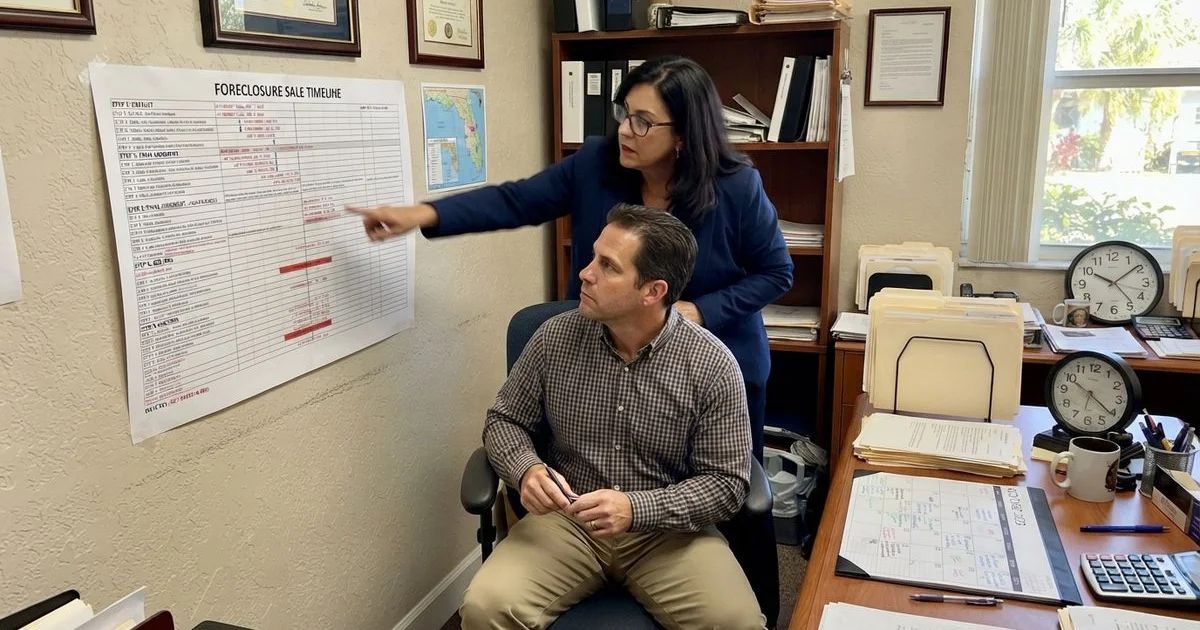
“How long do I have” is usually the first question anyone facing foreclosure asks, and it’s also the hardest one to answer with a single number. Florida foreclosure timelines swing widely based on the stage you’re in, whether the case is contested, and which county court is handling it. This guide breaks the timeline into its real drivers so you can estimate where your case likely falls, rather than relying on a guess.
This is general information, not a prediction for your specific case or legal advice. A local attorney reviewing your loan file and court docket can give you a far more accurate estimate.
The four stages that set your clock
Florida is a judicial foreclosure state, meaning a lender must sue and get a judge’s signature before a home can be sold. Broadly, a case moves through four stages, and how long you’ve likely got depends on which one you’re in right now.
- Missed payments, no notice yet. If you’ve fallen behind but haven’t received a formal notice of default, you typically have the most runway, often many months, before a lawsuit is even filed.
- Notice of default received. The servicer has sent formal notice that the loan is in default. A lawsuit commonly follows within weeks to a few months if the account isn’t brought current or resolved.
- Lawsuit filed. The clock now depends heavily on whether you respond and contest the case. Uncontested cases can reach judgment in a matter of months; contested ones can run considerably longer.
- Judgment already entered. At this point, a sale date is usually set within weeks, and the options for extending the timeline narrow sharply.
What actually extends a timeline
A few factors consistently add months to a Florida foreclosure case:
- Filing a timely, substantive answer that raises real defenses, rather than no response at all.
- Requesting mediation where a county offers it, which adds a scheduled step before the case can proceed to judgment.
- Challenges to standing, meaning disputing whether the plaintiff actually holds the right to enforce the note, which can require additional discovery and hearings.
- An active loan modification review, though this doesn’t automatically pause the court case unless it results in a dismissal or stay.
- A bankruptcy filing, which generally triggers an automatic stay pausing most collection activity, including a scheduled sale, at least temporarily.
None of these guarantee a specific number of extra months. They’re the levers that, used correctly, tend to buy time.

A rough way to think about your own case
| Where you are now | What commonly happens next | Rough runway before a sale |
|---|---|---|
| Missed 1-3 payments, no notice | Notice of default likely to follow | Longest runway, often 6+ months |
| Notice of default received | Lawsuit likely if unresolved | Moderate runway, often 3-6 months |
| Lawsuit filed, contesting | Discovery, motions, possible mediation | Can extend well past 6 months |
| Lawsuit filed, not contesting | Faster path to judgment | Shorter runway, often under 6 months |
| Judgment entered | Sale date is set | Weeks, typically |
If you want a rough personalized starting point, this directory also publishes a foreclosure timeline estimator that walks through these same stages and produces a ballpark range based on your inputs.
Time is only useful if you act on it
Whatever runway you have, it’s most valuable when it’s spent doing something: applying for a modification, gathering documents an attorney would need to evaluate defenses, or deciding between a short sale and continuing to fight the case. Homeowners who wait to see what happens tend to end up with fewer real options by the time a sale date is set.
Why county-level differences show up in these numbers
Two homeowners in similar situations, one in Cape Coral and one in a different Florida county, can end up with noticeably different timelines simply because circuit courts vary in caseload, staffing, and how quickly they schedule hearings. A firm that regularly handles cases in Lee County and the surrounding Cape Coral Metro area generally has a good sense of how local dockets are currently moving, which is one reason a general national estimate is less useful than a local read on your specific case.
If you want a professional read on where your specific case stands, a firm from this directory’s foreclosure defense category can review your notice, complaint, and docket and tell you what’s realistic. You can also see how this directory evaluates and ranks local firms on the ranking method page, or browse the full site from the homepage.
Questions people ask
- How many months do I typically have before a sale date is set?
- There's no fixed number. Cases where a homeowner doesn't contest anything can move to sale in well under a year. Contested cases, especially ones raising defenses about the lender's documentation, can run well past a year in some Florida counties.
- Does missing a payment start the foreclosure clock immediately?
- No. Most servicers wait until several payments are missed before sending a formal notice of default, and there's usually a further window after that before a lawsuit is filed.
- Can I stay in the home until the actual sale date?
- Generally yes, you can remain in the home through the court process and up to the sale, though the buyer at auction (or the lender if no one else bids) can later pursue a separate process to obtain possession.
- Does filing bankruptcy stop a scheduled sale?
- Filing for bankruptcy typically triggers an automatic stay that pauses most collection actions, including a scheduled foreclosure sale, though the lender can ask the court to lift that stay in some circumstances.
Related on this site
- Browse foreclosure defense litigation providers
- What to expect when you are served with a Florida foreclosure lawsuit
- What a foreclosure defense attorney costs in Florida
- You got a notice of default in Florida: what to do next
- DIY foreclosure defense vs. hiring an attorney: what is actually at stake
- All guides →