Bankruptcy vs. fighting foreclosure in court: comparing cost and outcome
By Petra Vogel · Updated 2026-08-01
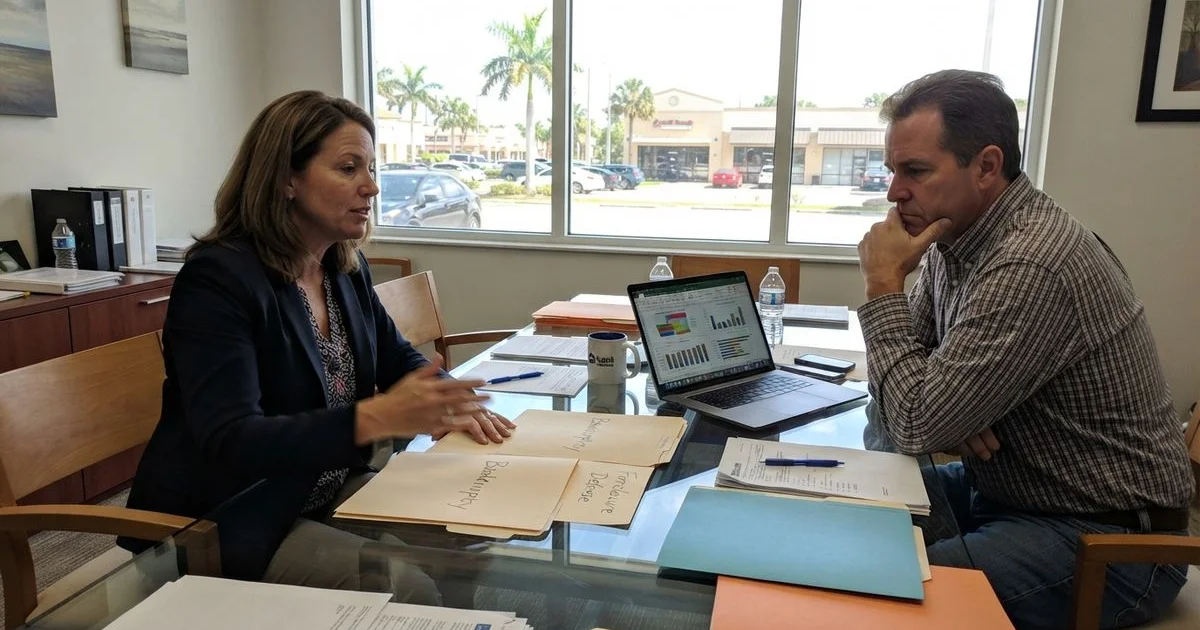
When a foreclosure case is underway, homeowners often frame the decision as a straight fight: contest the lawsuit, or file for bankruptcy protection. In reality, both paths have real costs and different strengths depending on your situation. This guide compares them directly.
This is general information to help you think through the tradeoffs, not legal or financial advice. A consultation with both a foreclosure defense attorney and a bankruptcy attorney can clarify which fits your actual numbers.
What each path is actually built to do
Contesting a foreclosure in court is about challenging the lawsuit itself: whether the lender has the right to enforce the note, whether required notices were properly sent, or whether the case has other procedural defects. It’s a legal fight focused specifically on the mortgage and the lawsuit.
Bankruptcy, particularly Chapter 13, takes a different approach. It’s a court-supervised process to reorganize your overall debt, including catching up on mortgage arrears through a structured repayment plan, while an automatic stay pauses collection actions, including the foreclosure case.
Comparing the cost
| Cost factor | Contesting the foreclosure | Filing Chapter 13 bankruptcy |
|---|---|---|
| Attorney fees | Vary by contest level, often billed by stage or hourly for trial work | Often a more predictable flat or near-flat fee for filing and plan work |
| Court filing costs | Generally lower, tied to the existing case | Bankruptcy filing fee plus credit counseling course cost |
| Ongoing costs | None beyond attorney fees during the case | Plan payments to the trustee, typically over three to five years |
| Effect on other debts | None, addresses only the mortgage | Can address credit cards, medical debt, and other unsecured debt too |
Fighting a case in court can be cheaper upfront if the case resolves relatively quickly, but the cost climbs if it heads to a lengthy trial. Bankruptcy has more predictable fees but comes with a multi-year payment commitment through the plan. For a deeper breakdown of what drives foreclosure defense fees specifically, the guide on what a foreclosure defense attorney costs in Florida walks through the factors attorneys weigh when quoting a fee.

Which situation favors which option
- You believe the lender’s paperwork has real problems (standing issues, notice defects): a contested foreclosure defense may be the stronger path, since bankruptcy doesn’t typically resolve those underlying legal questions about the note itself.
- You’re behind on payments but the loan itself isn’t in dispute, and you also carry other significant debt: Chapter 13 bankruptcy may make more sense, since it can restructure multiple debts at once while curing the mortgage arrears.
- Your income isn’t stable enough to commit to a multi-year repayment plan: a contested defense, a negotiated settlement, or a sale of the property may fit better than bankruptcy.
- You want to keep the home specifically and have steady income: Chapter 13 is often built for exactly this scenario.
They aren’t always mutually exclusive
Some homeowners start by contesting a foreclosure case and later decide bankruptcy is the better path once they see how the numbers and timeline are shaping up, or vice versa. An attorney familiar with both areas can help you avoid spending money on one strategy only to pivot later once your options have narrowed.
A few questions worth answering before you decide
Before committing to either path, it helps to have honest answers to a handful of questions. How much do you actually owe across all your debts, not just the mortgage. Is your income steady enough to sustain a repayment plan for three to five years, or is it more realistic to resolve the mortgage question on its own. Do you believe the lender’s documentation has real problems, or is the debt itself not seriously in dispute. And how much home equity is actually at stake, since that can change how aggressively either path is worth pursuing. Writing out rough answers to these before your first consultation tends to make that meeting far more productive.
The cost of doing nothing
It’s worth naming a third option here, even though it isn’t really a strategy: taking no action at all. Doing nothing doesn’t avoid the cost of either path, it just defers the outcome to whatever the lender’s lawsuit produces by default, typically a judgment and a scheduled sale on the fastest possible timeline. Whatever you decide between contesting the case and filing bankruptcy, making an active choice generally leaves you in a stronger position than letting the case proceed uncontested by default.
Getting a comparison specific to your numbers
Because the right choice depends heavily on your income, your other debts, and how strong your specific foreclosure defenses actually are, a direct comparison usually requires talking to an attorney who can review your full financial picture. This directory also publishes cost estimators for both foreclosure defense fees and bankruptcy filing costs if you want a rough starting range. For a professional read on your specific case, you can browse the full homepage or check how this directory evaluates local firms on its ranking method page.
Questions people ask
- Is bankruptcy always cheaper than fighting a foreclosure case in court?
- Not necessarily. Bankruptcy has its own filing fees and attorney costs, and a Chapter 13 case in particular involves ongoing plan payments for years. Which is cheaper overall depends on your specific debts, income, and how strong any foreclosure defenses might be.
- Can I do both, file bankruptcy and also contest the foreclosure?
- In practice, filing bankruptcy generally pauses the foreclosure case through the automatic stay rather than running alongside it, so most homeowners end up choosing one primary path, even though the underlying legal issues can sometimes still matter in the bankruptcy case.
- Which option keeps me in my home longer?
- It depends on the case. A strongly contested foreclosure defense can sometimes extend a timeline substantially, and Chapter 13 bankruptcy is specifically designed to let you keep the home while catching up on arrears, so the better fit depends on your goals and finances.
- Does one option protect my other debts better than the other?
- Bankruptcy addresses your overall debt picture, potentially discharging or restructuring other debts alongside the mortgage, while a pure foreclosure defense strategy generally focuses only on the mortgage and doesn't address other unsecured debt.